
back prev next Irish harp terms from Bunting
from Edward Bunting, Ancient Music of Ireland (Dublin 1840)
Irish cruit an chinn aird spoken by Gráinne Yeats Scottish Gaelic ceann-àrd chruit spoken by Tony Dilworth Click the play button to hear it spoken. help Two examples of ‘high-headed harps’ from the 18th century. The ‘head’ is the part at the top right on each of these two illustrations. The O'Neill harp Kept at the Ulster Museum, Belfast. 36 strings, longest 118cm Click here for more information Rose Mooney's harp Kept at the National Museum of Ireland, Collins barracks, Dublin. c.32 strings, longest 104cm Click here for more information Cinnard Cruit (p.31: Cinnard chruit) - The high-headed harp This is not a genuine Gaelic term, but has been crudely formed to match the English term. It doubtless represents a genuine form like cruit an chinn aird, 'the harp of the high head'. Cruit (a feminine noun) appears to be the oldest term for a harp (occurring as crott in the Old Irish period, c.600-c.900), and is apparently applied also to other stringed instruments. Colm Ó Baoill 2002
Click the play button to hear it spoken. help
Two examples of ‘high-headed harps’ from the 18th century. The ‘head’ is the part at the top right on each of these two illustrations.
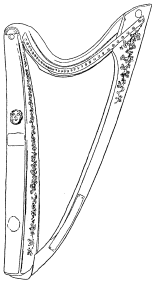
The O'Neill harp Kept at the Ulster Museum, Belfast. 36 strings, longest 118cm
Click here for more information
Rose Mooney's harp Kept at the National Museum of Ireland, Collins barracks, Dublin. c.32 strings, longest 104cm Click here for more information
Cinnard Cruit (p.31: Cinnard chruit) - The high-headed harp
This is not a genuine Gaelic term, but has been crudely formed to match the English term. It doubtless represents a genuine form like cruit an chinn aird, 'the harp of the high head'. Cruit (a feminine noun) appears to be the oldest term for a harp (occurring as crott in the Old Irish period, c.600-c.900), and is apparently applied also to other stringed instruments.
Colm Ó Baoill 2002